

National Safe Work Month | October 2026
At Thrive House, safety is about more than policies, procedures and ticking boxes. It is about people. It is about ensuring every staff member, participant, family member and visitor feels safe, supported and valued, and that everyone has the opportunity to go home healthy at the end of the day.
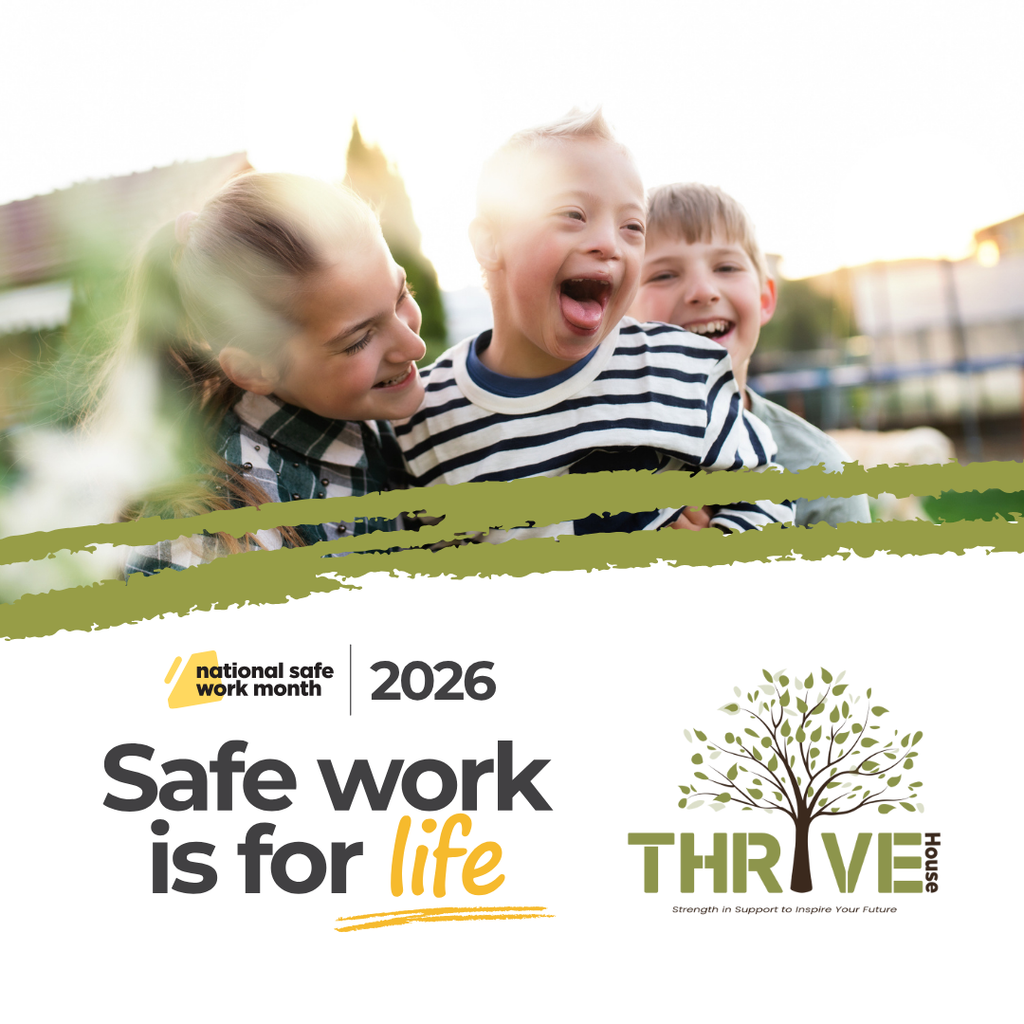
Each October, National Safe Work Month encourages workplaces across Australia to reflect on work health and safety (WHS), raise awareness of workplace risks and take practical steps to prevent injury, illness and harm. In 2026, the theme is “Safe work is for life”, a reminder that the decisions we make today can have a lasting impact on our health, wellbeing and future.
At Thrive House, we are using this month to shine a light on the importance of workplace safety, recognise the people working behind the scenes to protect our team, and remind everyone that creating a safe workplace is a shared responsibility.

The work happening behind the scenes
A safe workplace doesn’t happen by accident. It takes planning, communication, ongoing education and a commitment to continually improving the way we work.
Our Work Health and Safety (WHS) team works hard behind the scenes to identify potential hazards, review safety procedures, support risk management and help create safer environments across Thrive House. Much of this work may not always be visible in our day-to-day activities, but it plays an important role in protecting our staff and the people we support.
Our Human Resources (HR) team also plays a valuable role in supporting staff wellbeing. From providing access to our Employee Assistance Program (EAP) through Ultimate EAP to sharing resources about mental health, workplace wellbeing and recognising concerning behaviours, these initiatives help ensure our people know where to turn when they need support.
We recognise and appreciate the work of both teams in helping build a workplace where safety, respect and wellbeing remain priorities.
Safety includes mental health
When we think about workplace safety, we often picture physical hazards such as unsafe equipment, slips, trips and falls. While these risks are important, safety also includes our psychological health.
Safe Work Australia identifies psychosocial hazards as factors in the design or management of work, the work environment, or workplace interactions and behaviours that can cause psychological harm and, in some circumstances, physical harm.
These hazards can include:
- Excessive workloads, high job demands and fatigue.
- Inadequate support, unclear responsibilities or poor communication.
- Bullying, harassment, discrimination and workplace conflict.
- Violence, aggression and exposure to distressing or traumatic situations.
- Working in isolation or not having access to appropriate support.
Over time, these experiences can affect a person’s mental health, physical wellbeing, relationships and ability to feel safe at work.
Working in community and disability services can involve complex situations and emotionally demanding work. Recognising these challenges is important, but we should never assume that stress, burnout or harmful behaviour is simply part of the job.
At Thrive House, we want to encourage open conversations, early reporting and a supportive culture where concerns can be raised and addressed. Identifying a potential hazard early gives us an opportunity to understand the risk and take appropriate action before harm occurs.
Importantly, wellbeing initiatives such as EAP are one part of the picture. As Safe Work Australia explains, employers must also identify and manage the underlying psychosocial risks in the workplace rather than relying on individual support services alone.
Looking after our mental health and wellbeing
Mental health matters just as much as physical health. Everyone experiences challenges differently, and sometimes we may not immediately recognise when stress or pressure is beginning to affect us or someone around us.
Thrive House provides access to Ultimate EAP, offering staff an additional avenue for support when navigating personal or work-related challenges. Our HR team also shares information and resources to help staff better understand mental health, recognise when they may need support and learn how to access available assistance.
Looking after ourselves can include taking appropriate breaks, maintaining healthy boundaries, checking in with colleagues, asking for help when things become overwhelming and speaking up when workplace pressures are becoming difficult to manage.
If you notice changes in your own wellbeing, or are concerned about a colleague, don’t feel that you need to manage everything alone. Reach out through the appropriate internal support channels or access the resources available to you.
Seeking support is a positive step, not a sign of weakness.
Recognising coercive control and concerning behaviours
Another important part of creating safer environments is understanding coercive control and recognising the signs of domestic and family violence.
Coercive control involves a pattern of behaviours used to hurt, frighten, isolate, humiliate or control another person. It is not always physical, and the signs may be difficult to recognise from the outside.
Warning signs may include someone:
- Being isolated from family, friends or other support networks.
- Having their movements, finances, communications or daily decisions closely controlled.
- Experiencing repeated intimidation, humiliation, threats or manipulation.
- Appearing fearful of another person’s reactions or feeling unable to make independent decisions.
These behaviours can occur in intimate relationships and family settings, and their effects can extend into a person’s working life, mental health and overall wellbeing.
Raising awareness helps us better understand the signs, respond with compassion and recognise when someone may need support. It is important not to make assumptions about another person’s circumstances or pressure them to disclose personal information.
If you are concerned about yourself or someone else, a safe and respectful conversation can be a valuable first step. Listen without judgement, respect the person’s choices and encourage access to appropriate professional support.
Where to find support: DVConnect
DVConnect is a Queensland-based service providing support to people affected by domestic, family and sexual violence. Its services include crisis counselling, information, referrals and safety planning.
Support is available even when someone is unsure whether their experiences constitute abuse or is not ready to make a major decision about their situation.
- DVConnect Womensline: 1800 811 811 — available 24 hours a day, seven days a week.
- DVConnect Mensline: 1800 600 636 — available from 9 am to midnight, seven days a week.
- Emergency assistance: Call Triple Zero (000) if you are in immediate danger.
Including this information in our safety conversations is part of recognising that wellbeing extends beyond the workplace and that people may need different forms of support at different times.
Speaking up: the role of MITTI in workplace safety
A safe workplace depends on people feeling able to raise concerns and knowing how to report hazards, incidents and near misses.
At Thrive House, we use MITTI to support incident and hazard reporting. Reporting allows relevant information to be recorded, reviewed and followed up so that potential risks can be investigated and appropriate action considered.
A hazard does not need to result in an injury before it deserves attention. A near miss, an unsafe environment, faulty equipment or a concern about workplace safety can all provide valuable information that helps prevent future incidents.
We encourage all staff to:
- Recognise potential hazards and situations that could cause harm.
- Use the MITTI reporting process, including the workplace reporting QR codes, to report incidents and hazards.
- Provide clear and accurate information about what happened or what you observed.
- Report concerns promptly, including near misses, even when nobody has been injured.
- Follow relevant procedures and seek assistance when a situation presents an immediate risk.
Reporting is not about assigning blame. It is about understanding what has happened, identifying risks and helping the organisation learn and improve.
Our WHS team can then use the information available to support appropriate follow-up and risk management. Every report can contribute to a clearer picture of workplace safety and help us identify opportunities to prevent harm.
Safety is everyone’s responsibility
While our WHS and HR teams provide important guidance, systems and resources, a safe workplace requires everyone to play a part.
We can all contribute by following safety procedures, treating colleagues and participants with respect, communicating concerns early, looking out for one another and taking responsibility for our actions.
We also need to remember that safety is an ongoing commitment. National Safe Work Month provides an opportunity to start conversations and strengthen our awareness, but these practices need to continue throughout the year.
As we recognise this year’s theme, Safe work is for life, we encourage everyone at Thrive House to think about the small actions that can make a meaningful difference: reporting a hazard, checking in with a colleague, accessing support when needed or speaking up about a concern.
Our commitment to a safer Thrive House
At Thrive House, we care about the safety, health and wellbeing of our staff and the people we support. We want everyone to feel safe, respected, supported and valued, whether they are working in one of our facilities, supporting participants in the community or working behind the scenes.
We acknowledge the ongoing efforts of our WHS and HR teams and thank them for the work they do to strengthen our safety practices and provide resources for our people.
Most importantly, we want every staff member to know that their wellbeing matters, their concerns deserve to be heard and support is available.
Safe work is for life — and together, we can help make Thrive House a safer, healthier and more supportive place for everyone.